

How To Set Up A Paint Booth
Pigment booths are controlled environments for paint application, designed to incorporate hazardous vapors and provide a safer, healthier environment for painters.
Understanding the components of paint booth design and what purpose they serve is central to maximizing your spray booth's functioning. Here is a expect at the virtually common components of paint booth design:
Paint Booth Walls
The walls of pigment booths are either unmarried-skin or dual-pare. Both take advantages in terms of quality and cost.
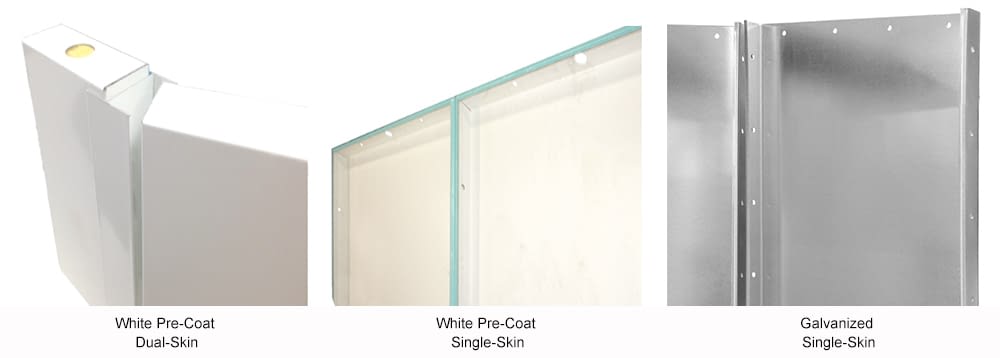
Unmarried-skin panels are strong and rigid, offering cost savings without compromising quality. Cleaning the interior walls of a single-peel spray booth is easy, as the outside flanges offering a smooth interior surface.
Dual-skin panels provide a smooth fit and finish for a stronger, longer-lasting pigment booth. They are insulated to decrease noise and ambient rut outside of the spray booth while keeping heated air inside the cabin.
White pre-coated walls are typically standard with dual-skin booths and may exist an option on single-peel booths. White walls increase the reflectability of the lights, making it piece of cake to see what you are painting.
Paint Booth Doors
A often disregarded component of pigment booth blueprint is the spray berth doors. They are essential to the performance of the spray booth and the quality of the finish.
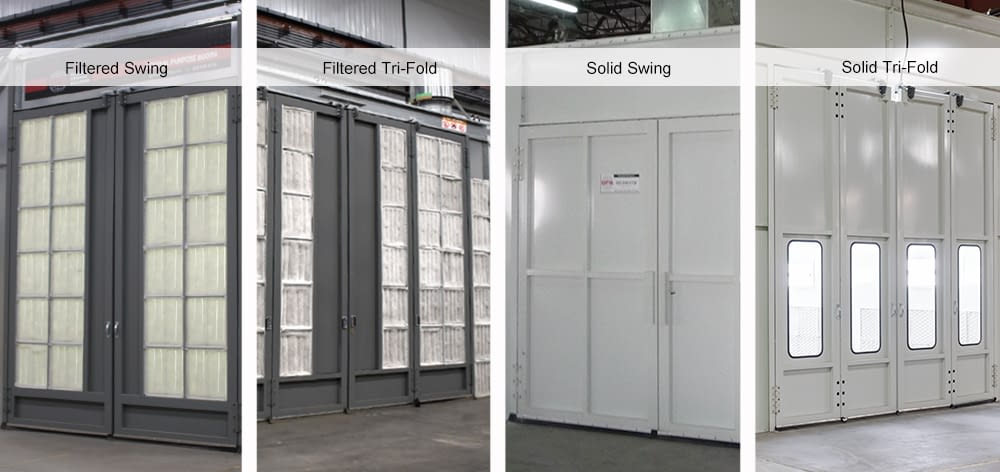
Product doors let vehicles, parts and products to enter the paint booth for spraying. The type of product door included on a paint booth is determined past whether or not the booth will be pressurized.
Discussions on paint booth force per unit area middle around whether the spray berth is under negative or positive pressure relative to the outside environment. With positive pressure, dirt and droppings cannot enter the working chamber and soil the object being painted. Meanwhile, negative pressure prevents emissions and volatile organic compounds (VOCs) from entering the room adjacent to the working bedroom.
Non-pressurized paint booths feature filtered production doors. The set of intake filters prevent contaminants from entering the paint berth. Solid doors are used on pressurized paint booths, every bit air enters the booth through a filtered intake plenum.
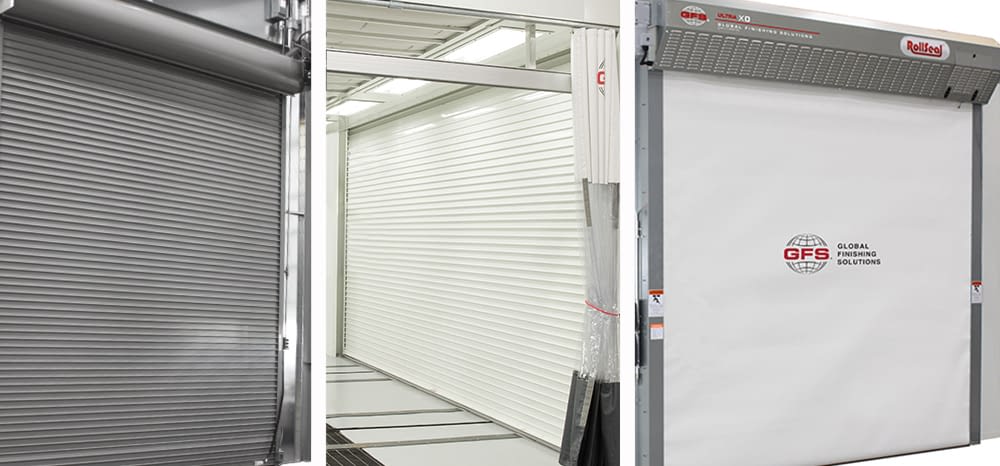
Bachelor in galvanized steel, aluminum and fabric, roll-up doors are another solution for enclosing pressurized pigment booths.
RollSeal Doors from Global Finishing Solutions (GFS) control contamination and airflow between bays. These doors are most useful when there are space restrictions or when included in a Side-Load Finishing Organization. They employ a triple-layered textile and airtight seal to foreclose overspray from escaping the paint booth. Air between layers of the fabric helps maintain desired rut levels within the spray booth to meet cure temperature requirements.
Personnel doors give painters quick and easy access to the booth. The door can exist located on either side of the pigment booth. Ascertainment windows may also be an option on personnel doors.
Intake Plenum
Located at the front or top of a pressurized paint booth, an intake plenum is a mechanism through which air is introduced into the booth. Air entering the spray booth through the intake plenum may period parallel to the floor or downward from an overhead plenum at the top of the sleeping accommodation. The intake plenum is designed with high-efficiency paint booth filters to remove dust and dirt before it enters the spray booth.
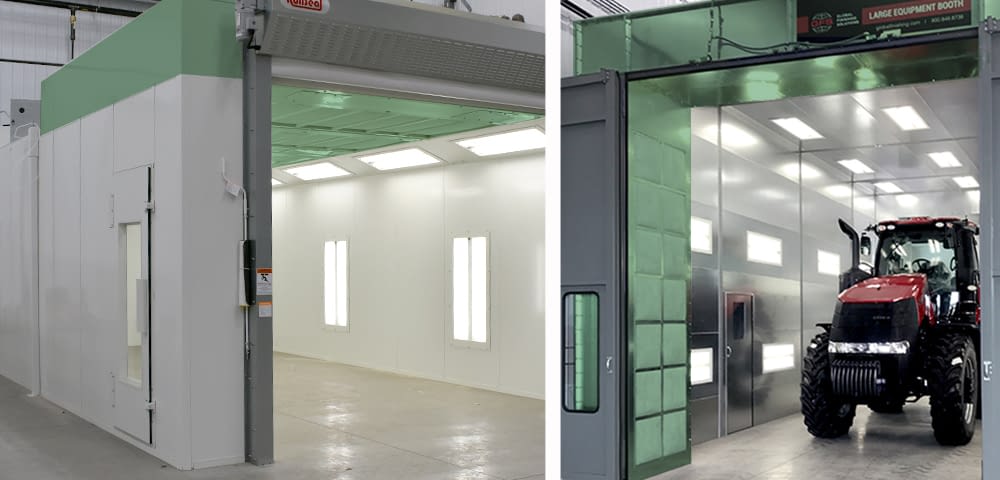
The intake plenum may exist vertical, located at one end of the pigment booth. Or it may be horizontal, using part or all of the ceiling within the paint booth every bit an aperture. In crossdraft spray booths, the intake plenum is located at the front of the enclosure. In downdraft, semi-downdraft and side downdraft spray booths, the intake plenum is located in the ceiling.
Frazzle Chamber, Pit & Plenum
An frazzle plenum is a mechanism through which air is exhausted from a paint berth. The exhaust bedchamber includes a filter system that captures particles before they enter the atmosphere. An frazzle fan draws air out of the working bedchamber in the paint booth and pulls it through the exhaust filters and exhaust chamber. Air then passes through exhaust ducting to the outside.
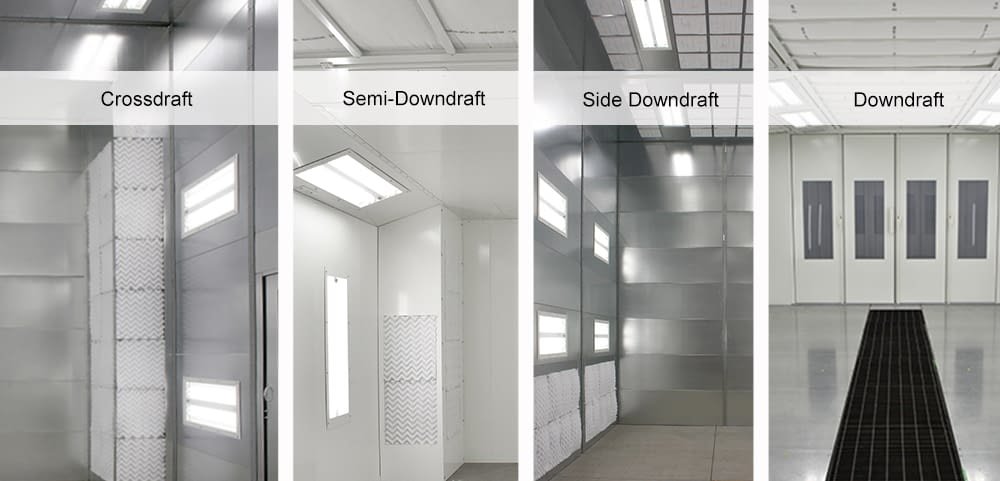
In crossdraft and semi-downdraft paint booths, the frazzle plenum is located at the rear of the spray booth. In side downdraft paint booths, filtered exhaust plenums are located on both sides of the spray berth.
When air reaches the floor in downdraft paint booths, information technology is exhausted through a filtered exhaust pit. The pit may consist of one, 2 or three rows. It is considered ductwork and must be designed based on the airflow requirements of the paint berth. The frazzle plenum is located at the rear of the booth or on each side of a downdraft spray booth.
The primary purpose of exhaust filtration is to protect a paint berth's fans, stack and plenum from overspray contamination, without slowing airflow. Exhaust filters must hold plenty pigment to avoid constantly replacing the pigment berth filters. They are located in the plenum at the back of the spray booth, in the pit or in the side downdraft exhaust chambers.
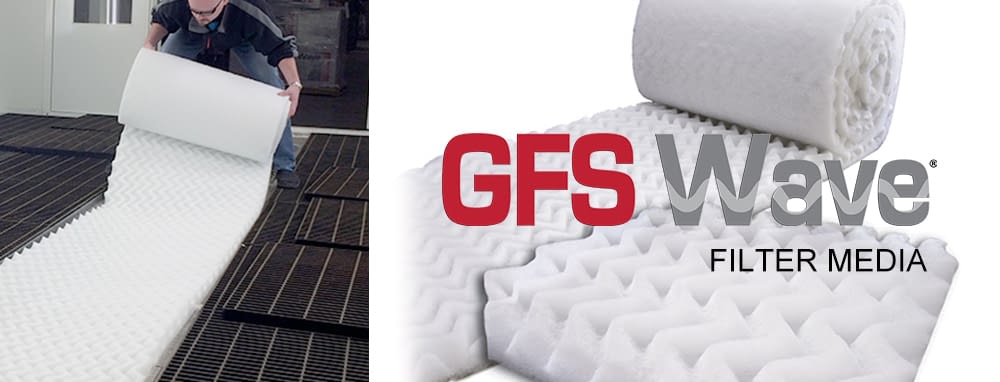
Included with all GFS pigment booths, GFS Wave exhaust filters take a property capacity of 4.4 pounds. Paint-laden air is captured across the surface and within the depth of the media. This extends filter service life and reduces operating costs. GFS Wave exhaust paint berth filters are useful for a variety of paints and a wide assortment of spray applications, from clear coats to high solids.
Air Make-Up Unit of measurement (AMU)
Air that is wearied from a paint berth must be replaced. If replacement air is non pulled directly from a building, it can be pulled from the outside and filtered through an air brand-up unit.
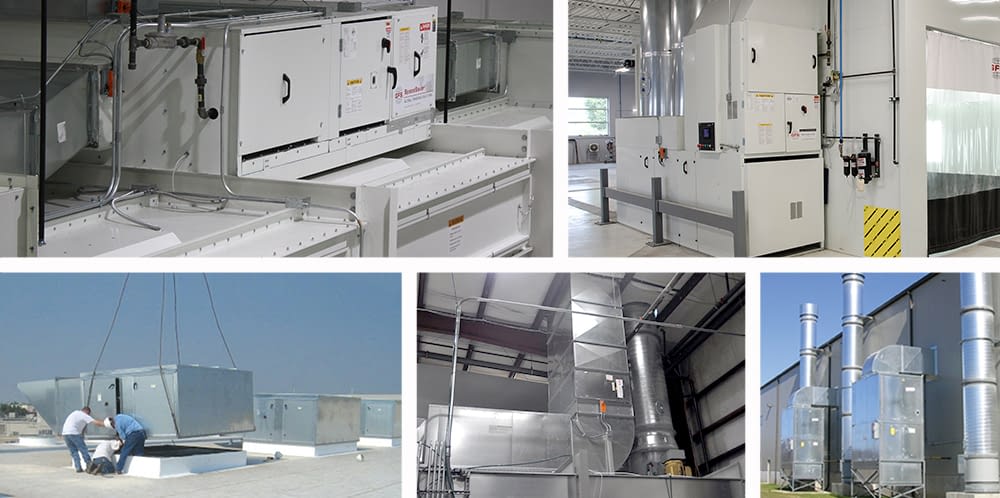
An air make-up unit allows for temperature command in a pigment booth during coating application and curing. AMUs maintain a abiding, leaving-air temperature regardless of the incoming, outdoor air temperature. They replenish equal amounts of fresh air for every cubic foot of air exhausted.
With an AMU, conditioned, filtered air is supplied to the paint berth. There is no demand to draw air from the facility, which improves working weather and lowers operating costs.
Pigment Booth Manometers
There are several styles of differential pressure gauges bachelor to measure out frazzle filter loading. Also known as a typhoon gauge, a manometer is included in all GFS industrial spray booths.
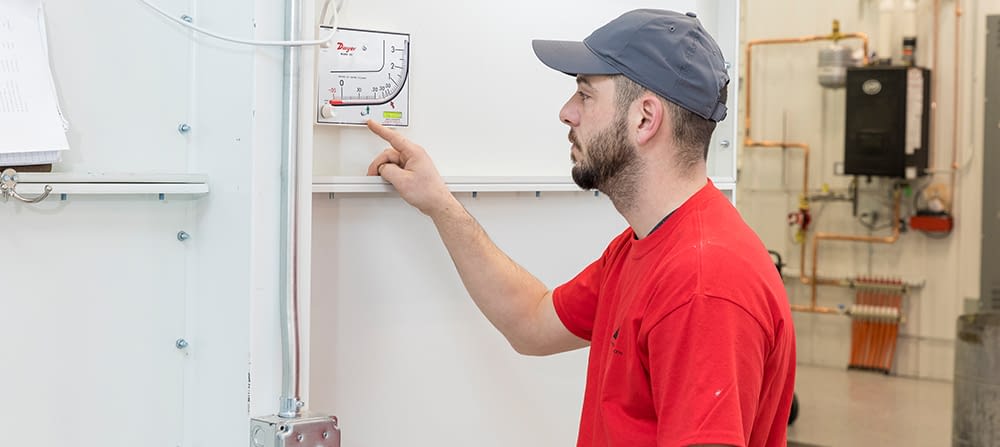
A manometer is the most commonly used "dingy filter" indicator. Information technology indicates when paint filters are loaded and demand replacement. Replacing intake and frazzle filters regularly is one of the simplest things for the cleanliness and efficiency of your paint booth.
Chock-full or overloaded filters hinder proper airflow through the paint booth. This can cause grit to enter the paint booth and overspray to recirculate, adversely affecting the quality of your paint job.
Some applications and processes may require monitoring devices to exist upgraded to a photohelic or magnehelic guess. The GFS Parts & Filters department can determine what blazon of monitoring is needed for your spray booth.
The amend you understand the components of pigment booth design, the more equipped you will be to maximize its efficiency. GFS has an experienced team of technical experts ready to assist you lot throughout the lifespan of your equipment.

How To Set Up A Paint Booth,
Source: https://globalfinishing.com/2019/06/12/understanding-key-components-of-paint-booth-design/
Posted by: knappcorted.blogspot.com
0 Response to "How To Set Up A Paint Booth"
Post a Comment